Dear Colleagues,
By 2050, more than 2 billion people will be over the age of 60, dramatically increasing demand for healthcare and straining traditional delivery systems. Meeting this challenge demands technical innovation at the interface of hardware, software, and intelligence.
Mobile and wireless sensing technologies have emerged as a transformative paradigm to help in addressing this need. Researchers have demonstrated increasingly ambitious capabilities: capturing vital signs on smart speakers, non-periodic biosignals like eye movements with tiny radars on smart glasses, and seemingly Chaotic muscle vibrations.
The Cambrian explosion of diverse wearables from rings to mouthguards to jewelry, enrich the sensing ecosystem with unique vantage points for measurement and intervention delivery.
Beyond personal devices, wireless health sensing has emerged as a key use case for 6G Integrated sensing and communication (ISAC) which envisions a future where ambient cellular signals can sense of human movements, which has significant implications for population-scale public health monitoring.
Finally, the field is shifting toward closed-loop agentic systems that fuse sensing, learning, and actuation to autonomously deliver interventions such as drug dosing and nerve stimulation.
This space is becoming a vibrant interdisciplinary area spanning computer science, electrical engineering, clinical medicine, public health policy, human factors, and ethics.
However, there is no dedicated academic forum that brings together researchers, clinicians, and practitioners across these disciplines to discuss and shape the future of wireless sensing for health. We created MobiDx to fill this gap. We hope it will serve as a catalyst for collaboration and a launchpad for next-generation wireless health sensing systems.
We look forward to seeing you in Austin,
Organizers: Justin Chan, Rajalakshmi Nandakumar, and Xiyuxing Zhang
Steering committee: Swarun Kumar, Rajesh Balan
Identify critical challenges that require coordinated community effort.
Build serendipitous connections that will serve attendees for years to come.
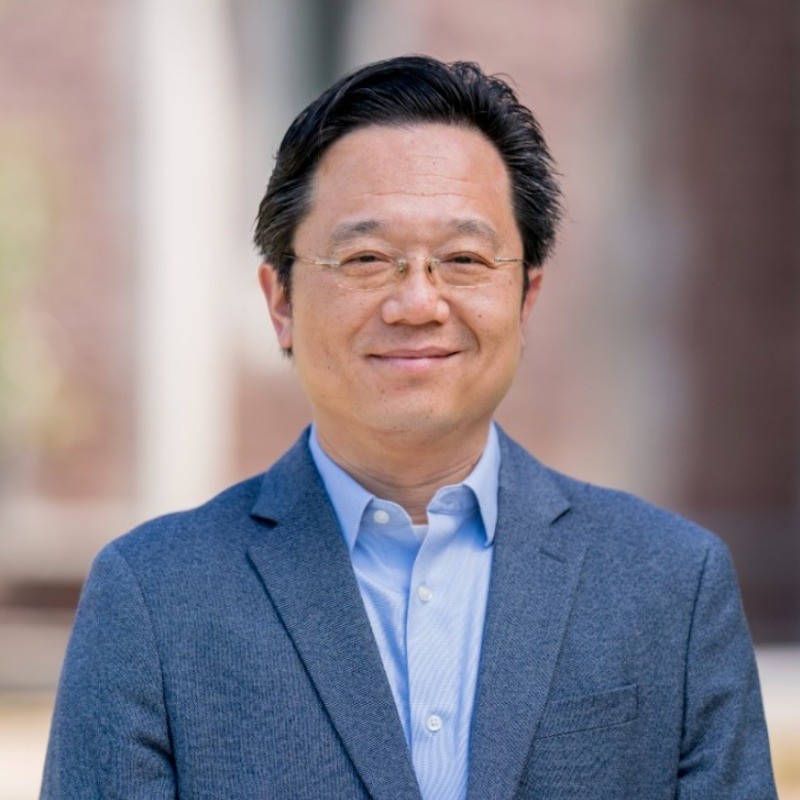
AI for Health: Translating Wearable Data into Clinical Impact
Wearables have been studied for decades, yet their clinical impact remains short of their potential. Translating messy, real-world sensor data into better health requires AI that can adapt to patient variability, integrate multimodal evidence, predict multidimensional outcomes, and quantify uncertainty. Drawing on applications from mental health to surgery, this talk will highlight advances in predicting complications and recovery, personalizing treatment, generalizing across patient populations, and strengthening AI-clinician collaboration. Together, these advances chart a path from promising wearable prototypes to clinically grounded AI systems that deliver scalable improvements in health care.
Chenyang Lu is the Fullgraf Professor of Computer Science & Engineering at Washington University in St. Louis, with joint appointments in Anesthesiology, Medicine, Neurosurgery, Psychiatry, and Public Health. He is the founding director of the AI for Health Institute, which brings together AI researchers and health professionals to address critical challenges in health care and public health. His research advances precision medicine and population health through AI and multimodal health data. Dr. Lu is a Fellow of both the ACM and IEEE and received the 2022 Outstanding Technical Achievement and Leadership Award from the IEEE Technical Community on Real-Time Systems. He also serves as Editor-in-Chief of ACM Transactions on Cyber-Physical Systems.
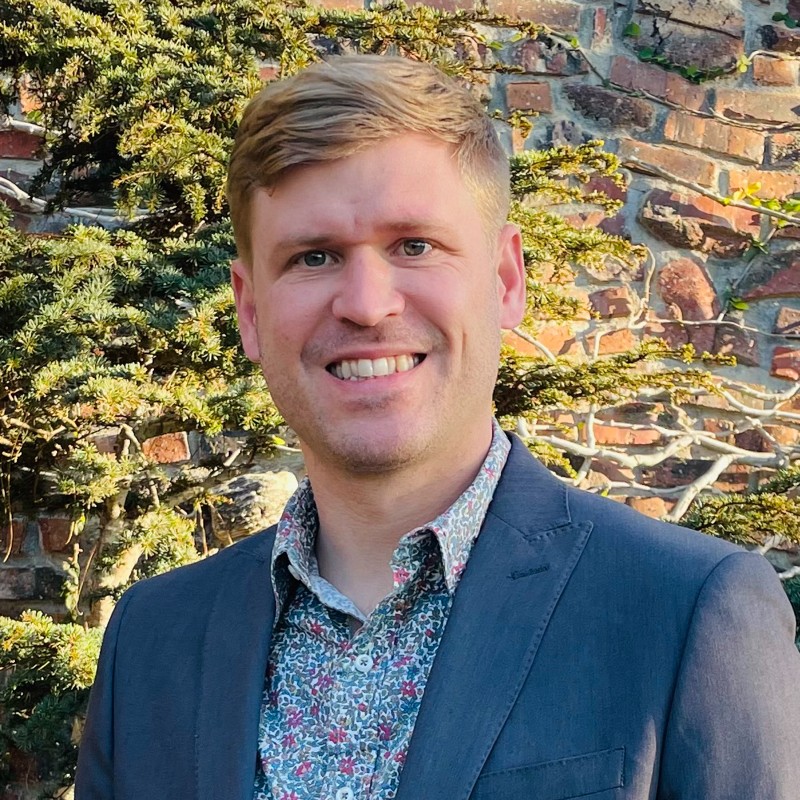
Analog to Algorithms — How AI Changed Sensor R&D Strategies
The emergence of AI in consumer health didn’t just add a new tool, it changed the fundamentals of hardware research. Using blood pressure as a case study, this talk navigates a decade of failures and learnings integrating AI into system design from the perspective of a hardware engineer.
We invite original research papers that have not been previously published and are not currently under review for publication elsewhere. We prioritize bold, risky, and visionary ideas that will spur thought-provoking discussion and long-term research directions.
Submissions must use 10pt font (or larger) and follow ACM double-column guidelines (Letter-sized, 8.5" × 11"). Challenge papers must bear a "Challenge:" prefix. Templates available at ACM Proceedings Template. All accepted papers will be published as part of the ACM proceedings.
Reviewing is single-blind. Submissions should not be anonymized—please include author names and affiliations.
All deadlines are Anywhere on Earth (AoE).
| Paper Submission | July 10, 2026 |
| Notification of acceptance | Aug 15, 2026 |
| Camera-Ready | Aug 30, 2026 |
| Workshop date (half-day) | October 30, 2026 |
MobiDx is a half-day workshop featuring keynotes and paper presentations.
Welcome and overview of the workshop goals
Chenyang Lu, Director, AI for Health Institute (AIHealth); Fullgraf Professor, Washington University in St. Louis
Research paper presentations (10 min talk + 5 min Q&A each)
Tim Weadon, Director of Biosensors, Samsung Research America
Research paper presentations (10 min talk + 5 min Q&A each)
Consider writing a Challenge Paper along these topics.
How can ambient infrastructure be repurposed to passively detect human health signals and motion across entire communities?
How can agentic systems safely and accurately fuse sensor data with clinical knowledge to deliver personalized interventions without clinician-in-the-loop oversight?
How do we design wireless health technologies that work effectively for underserved, rural, and low-resource populations?
Can digital twins, physiological models, and foundation models enable virtual clinical trials that accelerate validation of health sensing technologies while reducing the cost and burden of traditional human studies? What are the scaling laws for biosignal foundation models?
Are the current regulatory frameworks sufficient to move health sensing prototypes to FDA-cleared clinical tools?
How can instrumented home environments detect physiological and cognitive decline early enough to intervene?